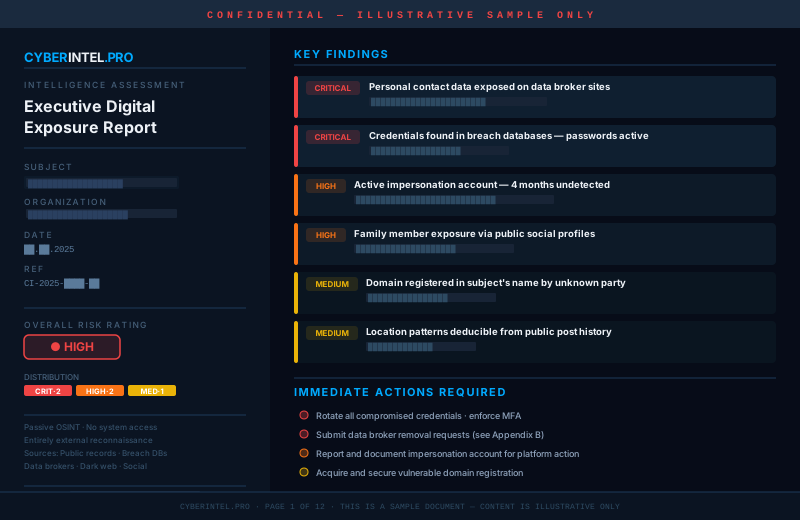
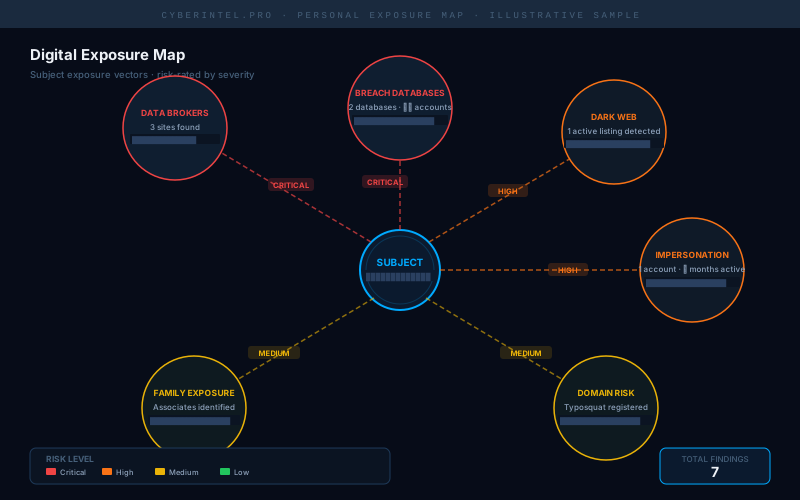
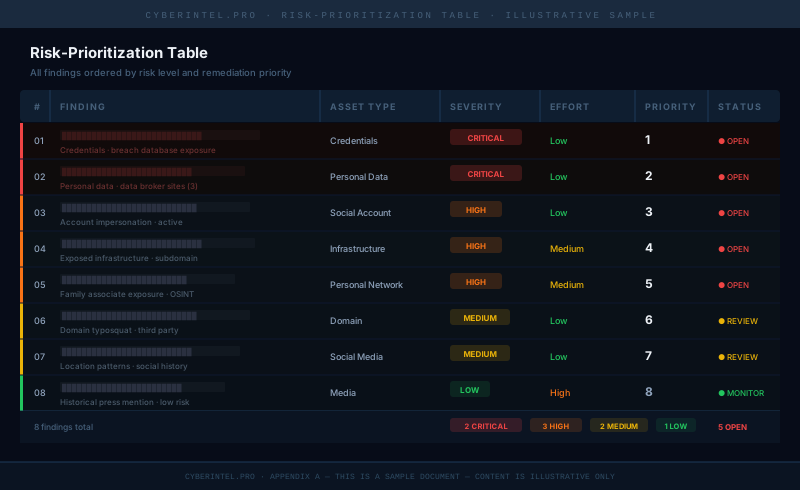
Shadow IT, forgotten subdomains, exposed credentials, misconfigured cloud assets — most organizations carry significant external exposure they have never mapped. This assessment finds it before someone else does.
Your security team protects what it knows about. But organizations accumulate digital exposure they never intended — from cloud experiments that became permanent, to contractor environments that were never decommissioned, to employee credentials that appeared in breach databases months ago.
Unauthorized services, personal cloud accounts, and developer tooling used without security oversight — exposed to the internet and invisible to your team.
Employee email addresses and passwords appear in breach databases daily. Attackers use these for credential stuffing before you even know they're out there.
Old subdomains, decommissioned servers, and test environments that still accept connections — often without the security controls applied to your main infrastructure.
Publicly accessible storage buckets, open APIs, and misconfigured permissions that expose sensitive data or provide an attacker a foothold.
This assessment is most valuable when your external exposure is genuinely unknown — and the stakes of getting it wrong are high.
New to the role and need a baseline. Or responsible for an environment that has grown faster than your visibility into it.
Investors, acquirers, and underwriters increasingly require independent security assessment. Find the gaps before they do.
After a breach, the critical question is: what else is exposed? This assessment answers it without expanding the footprint of the incident.
Acquiring a company means inheriting their attack surface. Know what you're buying before the deal closes.
This assessment is also commonly commissioned by law firms handling cyber disputes, regulated financial institutions ahead of audits, and technology companies preparing for enterprise customer security reviews.
Everything in this assessment is conducted through external open-source intelligence — the same methods an attacker would use in reconnaissance, before touching your systems. We require no internal access.
Every finding is risk-rated, contextualized, and tied to a specific recommended action. The executive summary is designed to be shared with board members and non-technical stakeholders.
We establish your seed assets (primary domains, known IP ranges, key subsidiaries) and agree on scope. This call is free and confidential.
External discovery of your entire digital footprint — subdomains, IP ranges, cloud assets, technology stack, and exposed services — using OSINT methodology.
Cross-referencing your domains, email patterns, and employee identifiers against breach databases and dark web sources for leaked credentials and active targeting.
Every finding is assessed for actual risk, not just theoretical severity. We distinguish between technically interesting and genuinely exploitable.
You receive both the executive summary and technical report simultaneously. We schedule a walkthrough to explain findings and prioritize your remediation response.
The following is based on a real engagement. Details have been modified to protect client confidentiality.
A fintech platform preparing for a Series B round engaged us at the recommendation of a lead investor who wanted independent security diligence. The company had a full-time security engineer and believed their external exposure was well-managed.
The assessment identified three forgotten development servers that had been running for over two years — two with valid production API keys embedded in their configuration. A separate investigation found 47 employee credentials in public breach databases, 11 of which matched the company's current active directory password policy, suggesting they were still in use. A wildcard subdomain pointed to a decommissioned third-party service that was still resolving and returning a valid authentication page.
A 30-minute scoping call is free, confidential, and comes with no obligation. We'll tell you what we'd look for and what it would cost.