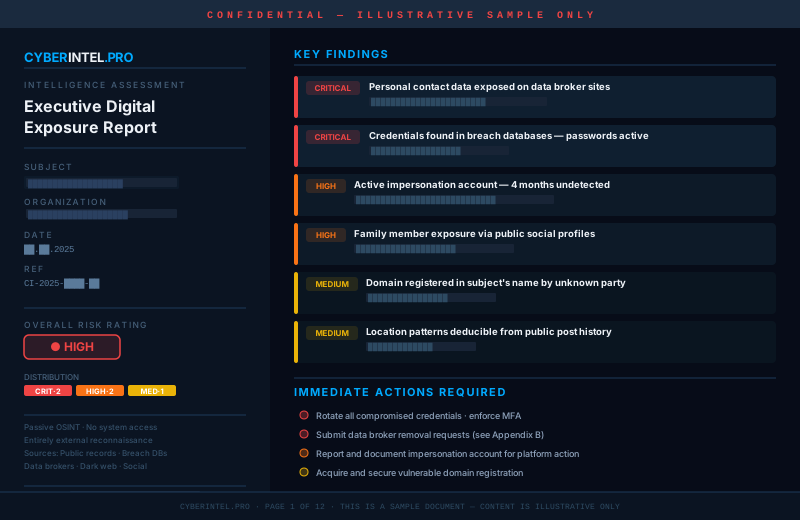
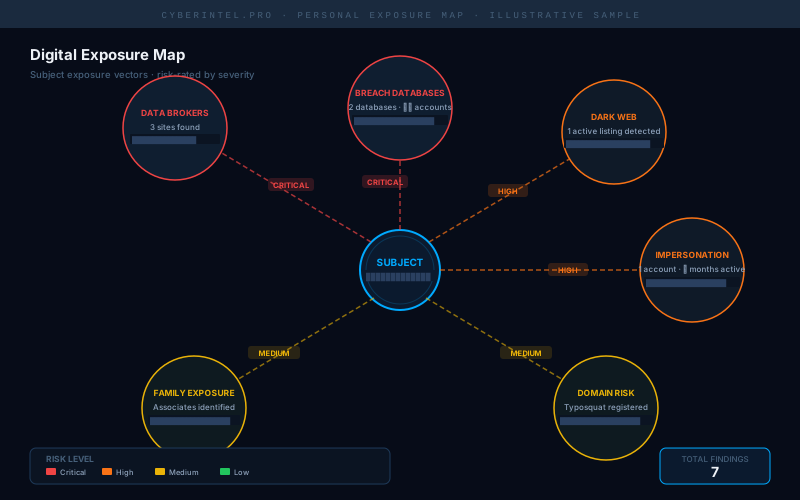
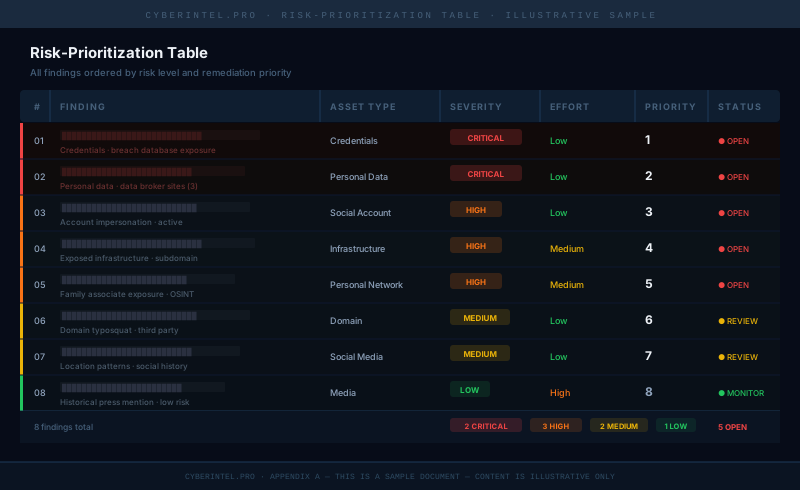
Before a business dispute, hostile negotiation, media investigation, or targeted attack — someone may already be researching you and your family from open and compromised sources. This assessment tells you exactly what they can find, and helps you reduce it.
Executives, founders, and high-profile individuals are high-value targets. Not because of what you know — but because of what access to you, or leverage over you, is worth to someone else.
From targeted social engineering to physical threats — knowing your home address, daily patterns, family members, and security gaps makes you a tractable target.
Litigation, divorce proceedings, hostile acquisitions, and business disputes all involve parties who may commission OSINT research on you before a single court filing.
Public exposure, short-seller campaigns, regulatory scrutiny — investigative journalists and financial analysts use the same tools we do. Know your profile before they do.
Competitors, investment banks in opposing mandates, and private intelligence firms conduct background research on key executives as standard practice.
This is not a background check. It's an intelligence assessment — conducted on your behalf, from the perspective of someone who wants to find leverage against you.
Pre-IPO, pre-exit, entering a major transaction, or managing a sensitive business situation that's attracting attention.
Wealth creates exposure. Family members, properties, travel patterns, and corporate structures can all be discovered and exploited by the wrong people.
Travelling to or operating in regions with elevated political, intelligence, or criminal risk — where your digital profile can make you a target.
Pre-travel and pre-event OSINT assessment to inform physical security planning and identify social engineering risk vectors.
This assessment is conducted entirely from external, open sources — the same sources accessible to anyone with time and methodology. We do not require access to your accounts, devices, or networks.
The report is written for a non-technical reader. It tells you what is findable, from where, who is most likely to use it against you, and what you can do about each finding.
You provide your name, known digital identifiers (email addresses, usernames), and any specific concerns. An NDA is signed before any information is exchanged.
Systematic search across data brokers, public records, social platforms, news archives, and corporate databases — structured as an adversarial research exercise.
Cross-referencing your identifiers against breach databases, dark web marketplaces, and threat actor forums for active exposure or targeting.
Each finding is assessed not just for what it reveals, but for what threat actor would find it useful and how it could be weaponized — to ensure remediation priorities reflect real risk.
The report is delivered securely. A private review call follows to walk through findings, answer questions, and agree on immediate priorities.
Details have been modified to protect client confidentiality.
A senior partner at a PE firm was about to close a major secondary transaction involving a counterparty known for aggressive tactics. Before signing, he commissioned a personal exposure assessment to understand what the opposing side could find about him.
The assessment found his home address and names of two family members listed on four data broker sites, accessible to anyone willing to pay a nominal fee. His personal email address appeared in two breach databases with what appeared to be cracked passwords still matching his current format. An impersonation account on one professional platform had been active for seven months, sending connection requests to his known contacts. A decade-old press interview contained a detail about his daily routine that could inform physical surveillance.
Initial conversations are confidential and come with no obligation. We can usually scope an engagement within 24 hours of a first call.